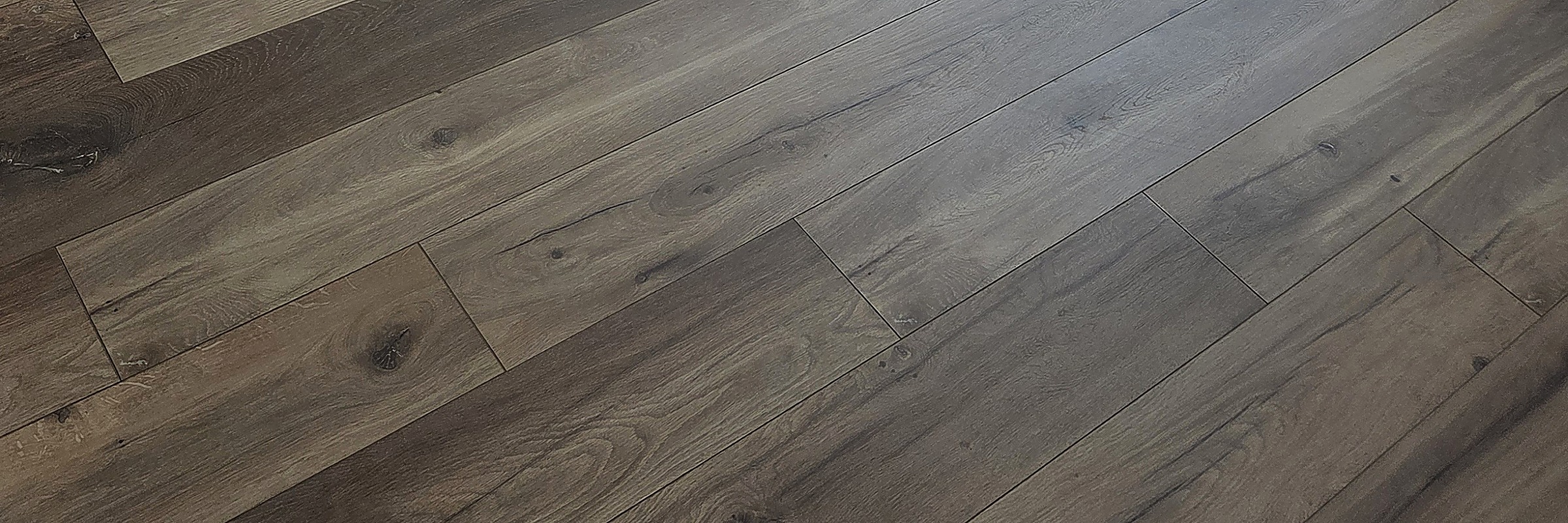
Flooring Repair in Elk River, MN
What Flooring Repair Covers
Not every damaged floor needs to be replaced. We repair all the floor types we install — engineered hardwood, luxury vinyl plank and tile, laminate, and ceramic tile — fixing the specific problem rather than tearing out a whole room. The aim is a repair that blends into the surrounding floor so well you have to look for it.
We repair all floor types: replacing damaged boards and planks, cracked tiles, lifting or peaking floating floors, gaps, and transition pieces. If a single plank is gouged, a tile is cracked, a floating floor has lifted at a seam, or a transition strip has come loose, that is a repair — and it is usually a smaller, faster project than a full replacement.
Where Repair Shines, and Where It Doesn't
Repair shines when the damage is localized — a few boards, a single tile, one lifted seam, a gap that opened up over a dry winter. In those cases a targeted fix costs far less than a new floor and can extend the life of what you have by years. Matching an existing floor is part of the craft, and we work to source or finish material that reads as part of the original install.
Repair does not shine when the damage is widespread, when the floor has failed across a room, or when the cause is still active. Water-damaged sections get replaced once the water source has been fixed — repairing a floor while a leak is still feeding it is wasted work. In those cases we will tell you plainly that a larger project is the better path, and we will say so before you spend anything.
How Repairs Hold Up in Minnesota Homes
Minnesota's seasonal swing is the source of a lot of the repairs we see. Dry winter air pulls moisture from wood and laminate, opening gaps between planks; summer humidity pushes them back. A floating floor that peaked over a humid summer or a hardwood floor that gapped over a dry winter are common calls, and both are often repairable without replacing the whole floor.
Winter salt and slush bring their own damage — a scratched plank at an entry, a tile cracked by a dropped boot, a transition worn down by a season of traffic. These are exactly the localized problems a repair is built to solve, and they tend to be straightforward to address before they spread.
Assessing the Subfloor Before a Repair
A repair is only as good as what is underneath it. Before we replace a damaged board or tile, we look at why it failed — a loose subfloor under a cracked tile, a moisture problem under a swollen plank, a high spot under a peaked floating floor. Fixing the cause is what keeps the repair from failing the same way a few months later.
For water-damaged sections, that means confirming the subfloor is dry and sound before new material goes over it. We will not install a repair on top of a problem we can see, and we will tell you what we find rather than papering over it.
How Our Repair Work Works
We start with an honest assessment of what is fixable. Some damage is a clean, targeted repair; some is a sign that the floor has reached the end of its life. We tell you which is which before any work starts, so you can decide with the full picture. For a repair, we match material as closely as we can, remove only what is damaged, and blend the new pieces into the surrounding floor.
We install and we repair, and we are clear about what we do not do: we do not sand and refinish hardwood. If what you actually need is a refinish of an existing solid hardwood floor, that is a separate service and not one we offer — we will tell you up front and point you in the right direction. We also do not take commercial work. This is residential repair, handled by the owner from first call to final walkthrough.
Questions
Flooring Repair FAQ
No. We install and repair, but we do not sand and refinish hardwood. If what you need is a refinish of an existing solid hardwood floor, that is a separate service we do not offer — we will tell you up front and point you in the right direction.
We work to match the existing floor as closely as we can — sourcing comparable material and blending the new pieces into the surrounding install. A perfect match is not always possible if your floor is discontinued or has aged, but we will show you the closest option before we start.
Yes — water-damaged sections get replaced once the water source has been fixed. We will not install a repair on top of an active leak, because the new material would fail the same way. Confirm the cause is resolved first, then we replace the damaged section.
Often, yes. Lifting or peaking floating floors are a common repair — usually caused by a lack of expansion room, a high spot underneath, or humidity swelling the planks. We assess the cause, address it, and re-seat the affected area so it lies flat again.
We repair all the floor types we install — engineered hardwood, luxury vinyl plank and tile, laminate, and ceramic tile. That includes damaged boards and planks, cracked tiles, lifting or peaking floating floors, gaps, and transition pieces.
We start with an honest assessment of what is fixable. If the damage is localized, a targeted repair usually makes sense. If the floor has failed across a room or the cause is still active, a larger project is the better path. We tell you which is which before any work starts.
Where We Work
Serving These Communities
We install and repair flooring repair in homes across Sherburne, Anoka, Wright and surrounding counties.
Get Started
Request Your Free Consultation
Tell us about your space. We'll get back to you to talk it through.